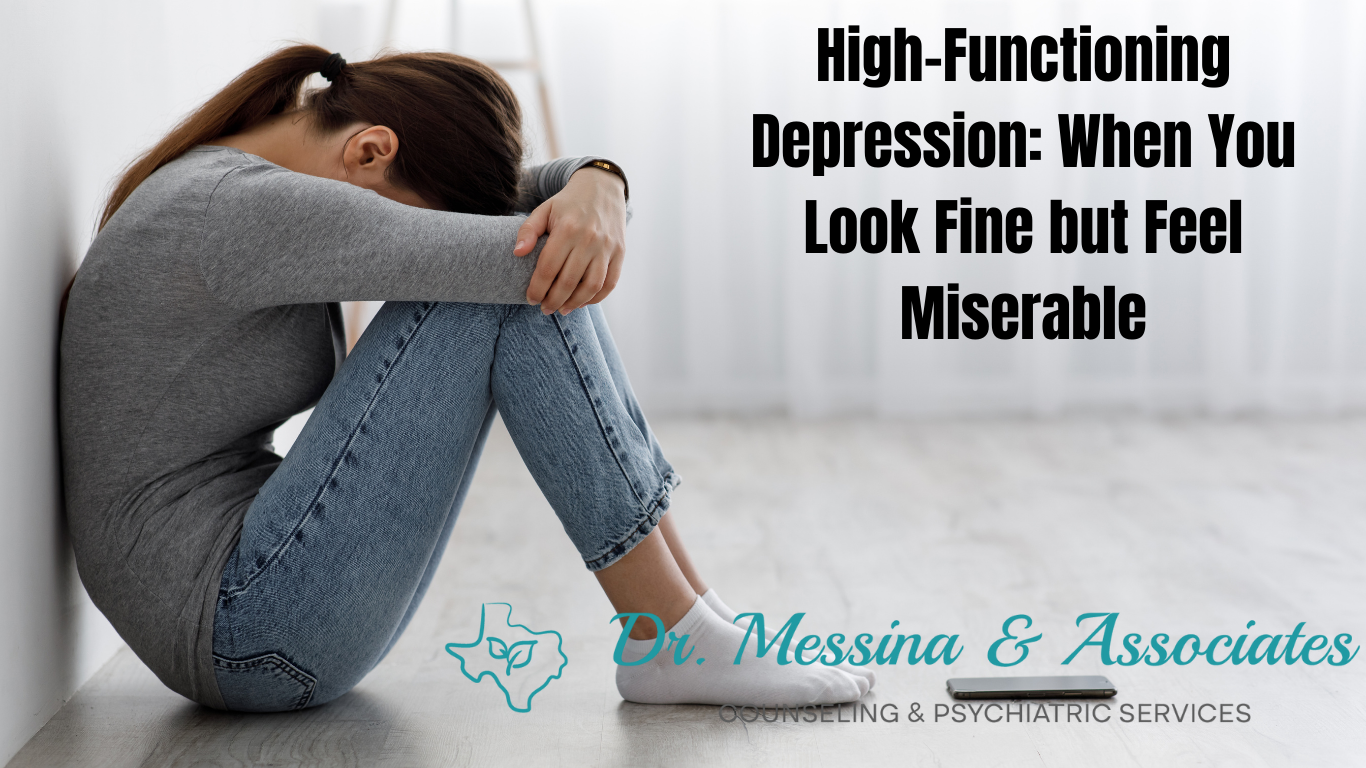
High-functioning depression affects countless people who seem perfectly fine on the outside. They show up to work, take care of their families, meet deadlines, and appear steady—but inside, they feel exhausted, numb, or disconnected. At Dr. Messina & Associates, we help clients understand this invisible form of depression and get the support they need to feel genuinely better, not just “functional.”
Unlike classic depression, high-functioning depression doesn’t always look like sadness or withdrawal. Many people experiencing it are successful, responsible, and outwardly composed. That’s what makes it so easy to miss. If you’ve been silently pushing through each day, feeling low despite everything appearing “fine,” you’re not alone—this type of depression is more common than most people realize.
The Hidden Nature of High-Functioning Depression
High-functioning depression, often linked to Persistent Depressive Disorder (dysthymia), is marked by long-term low mood that doesn’t fully disrupt daily responsibilities—but still drains energy and joy. Because symptoms are subtle, many people don’t realize what they’re experiencing is depression. They just feel “off,” overwhelmed, or emotionally flat.
Common signs include:
- Feeling tired even after resting
- Trouble enjoying things you used to love
- Going through the motions without connection
- Low motivation masked by high performance
- Constant self-criticism or perfectionism
- Irritability, overwhelm, or emotional exhaustion
If these symptoms resonate, exploring counseling options can offer clarity and relief.
The National Institute of Mental Health provides additional insight into dysthymia and chronic depression:
Why High-Functioning Depression Goes Undetected
People with high-functioning depression are often the ones others rely on. They’re the steady friend, the responsible coworker, the parent who never drops the ball. This makes it incredibly difficult for them to acknowledge when something is wrong.
Reasons it goes unnoticed include:
- They don’t “look depressed” — no major breakdowns, no missed responsibilities.
- They stay busy — activity becomes a distraction from emotional pain.
- They compare themselves to others — “Other people have it worse.”
- They fear burdening loved ones — so they keep smiling and pushing through.
- They normalize the feeling — eventually believing emptiness is just part of life.
If the emotional heaviness continues despite your efforts, speaking with a therapist can help uncover what your mind has learned to hide.
How High-Functioning Depression Impacts Daily Life
This form of depression quietly chips away at your well-being. You may complete your tasks, show up for everyone else, and appear stable, but inside you feel depleted. Over time, this can affect:
Relationships:
You may withdraw emotionally, feeling disconnected or too tired to engage.
Work Performance:
You might still succeed, but it takes far more effort than it should.
Self-Worth:
Many carry silent guilt—believing they “shouldn’t” feel this way.
Physical Health:
Chronic stress often leads to headaches, muscle tension, and sleep issues.
If you’ve also noticed irritability or emotional overwhelm, exploring psychiatric care may help determine whether a blended approach is right for you.
Why Therapy Makes a Meaningful Difference
Many people with high-functioning depression believe they should just “try harder” or wait for things to get better on their own. But depression—even mild, quiet depression—has deep roots that often need professional support.
Therapy helps you:
- Understand the underlying causes of your low mood
- Challenge patterns of self-criticism and perfectionism
- Build healthier coping strategies
- Improve emotional resilience
- Rediscover joy and motivation
- Stop relying on productivity to feel “okay”
Cognitive Behavioral Therapy (CBT), mindfulness-based approaches, and supportive counseling all play a role in helping clients reconnect with themselves and build a more fulfilling emotional life.
If your symptoms began in adolescence or earlier, a psychological evaluation can help determine whether underlying factors—such as anxiety or ADHD—are contributing.
When You Need Support for High-Functioning Depression
If you’ve been holding everything together on the outside while quietly falling apart inside, you deserve help—not more pressure. High-functioning depression is real, valid, and treatable.
At Dr. Messina & Associates, we provide compassionate, individualized therapy to help you feel lighter, more connected, and more in control of your emotional health. You don’t have to keep pretending everything is fine. Real support is available, and healing is possible.
Reach out today to schedule a confidential appointment and start moving toward a life that feels meaningful—not just manageable.