
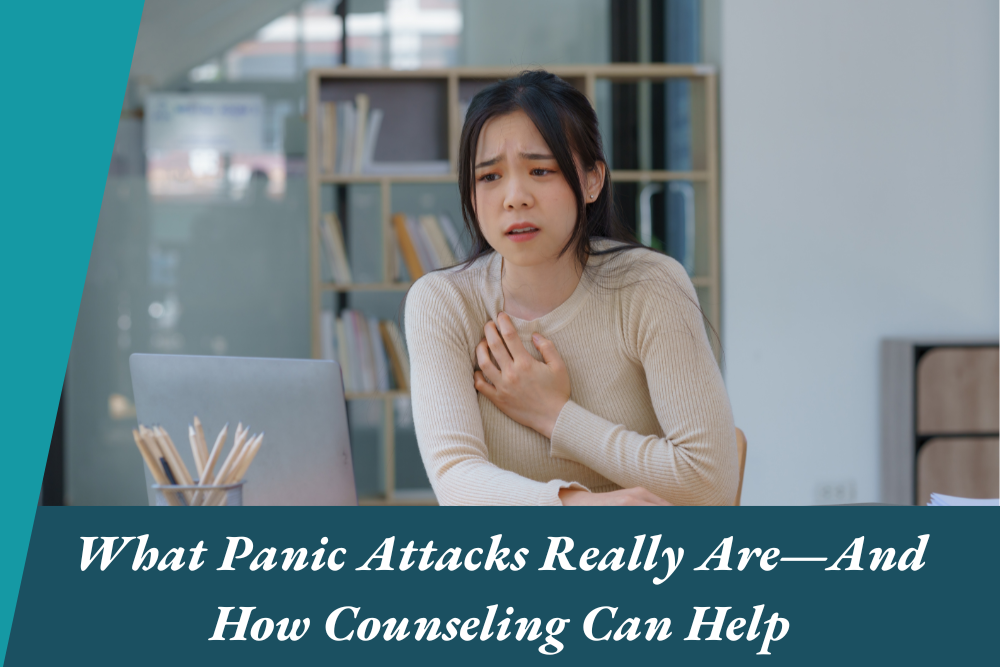
A racing heartbeat. Shallow breathing. Sweaty palms. A feeling that something terrible is about to happen—even when nothing seems wrong.
For anyone who has experienced a panic attack, the fear feels real, overwhelming, and uncontrollable. Panic attacks can happen suddenly, often without warning, leaving individuals terrified of when the next one might strike.
Many people try to push through in silence, afraid others won’t understand. But panic attacks are not “just in your head”—they are a real, physical, and psychological response to extreme anxiety. The good news is that they can be treated effectively through therapy, education, and support.
Understanding Panic Attacks
A panic attack is an intense episode of fear or discomfort that peaks within minutes and is often accompanied by powerful physical sensations. During an attack, the body’s “fight-or-flight” response activates, even when there’s no immediate danger.
Common symptoms include:
- Rapid heartbeat or chest tightness
- Shortness of breath or feeling like you can’t breathe
- Dizziness, trembling, or sweating
- Chills or hot flashes
- Feeling detached from reality (derealization)
- Fear of losing control or dying
These sensations are the body’s way of responding to perceived danger—but when this alarm goes off too often or too intensely, it becomes panic disorder.
While a panic attack itself is not life-threatening, the fear of having another one can be debilitating. People often start avoiding places, activities, or situations that might trigger another attack—leading to isolation, disrupted routines, and even depression.
Panic Attacks vs. Panic Disorder
It’s common for people to experience one or two panic attacks in their lifetime, especially during periods of extreme stress. However, when panic attacks occur repeatedly and create lasting fear or behavioral changes, they may signal panic disorder.
Those living with panic disorder often describe feeling trapped by the unpredictability of their symptoms. Everyday activities—driving, shopping, public speaking, or even sleeping—can become sources of anxiety. This constant fear can gradually shrink a person’s world, making them feel powerless or ashamed.
But you don’t have to live that way. Understanding what panic attacks are—and why they happen—is the first step toward regaining control.
What Causes Panic Attacks?
The causes of panic attacks are different for everyone. Some people experience them during periods of chronic stress, while others have a genetic or biological predisposition to anxiety. Certain personality traits—such as being highly sensitive or self-critical—can also make someone more prone to panic.
Other contributing factors may include:
- Major life changes or transitions
- Past trauma or unresolved emotional pain
- Substance use or withdrawal
- Health conditions affecting heart rate or breathing
- Ongoing anxiety or mood disorders
It’s important to remember that panic attacks are not a sign of weakness or a lack of willpower—they’re a sign that your nervous system is overloaded and needs support.
How Counseling Helps Calm the Storm
Counseling and talk therapy provides a safe, structured environment where you can understand what’s happening in your body and learn how to respond effectively. At Dr. Messina & Associates, we use evidence-based approaches to help individuals manage panic attacks, reduce anxiety, and rebuild confidence.
1. Understanding the Panic Cycle
Therapy begins by helping you understand how panic works. The more you fear an attack, the more likely it is to happen. This cycle of anxiety and avoidance can be broken by learning how to interpret sensations differently. With guidance, you’ll begin to see that panic symptoms—though uncomfortable—are not dangerous.
2. Cognitive Behavioral Therapy (CBT)
CBT is one of the most effective treatments for panic attacks. It helps you identify and challenge distorted thinking patterns that feed anxiety. For example, replacing “I’m going to faint” with “This feeling will pass—it’s just my body’s stress response” reduces fear and helps you stay grounded.
3. Breathing and Grounding Techniques
When panic strikes, physical symptoms take over. Learning controlled breathing, progressive muscle relaxation, and mindfulness can calm the body’s alarm system and restore a sense of control. These skills can be practiced anywhere—at home, at work, or in public.
4. Exposure and Desensitization
For some people, therapy includes gradual exposure to feared situations. With a therapist’s support, you slowly face anxiety triggers in small, manageable steps. Over time, your brain learns that these experiences are safe, reducing the power panic holds over you.
5. Addressing Underlying Issues
Panic attacks can sometimes mask deeper emotional pain—grief, trauma, or perfectionism. Therapy provides space to explore and heal these underlying factors, reducing overall stress and emotional reactivity.
How Long Does It Take to Feel Better?
Most clients begin noticing improvement after a few sessions. As they gain insight and tools, panic attacks become less frequent and less intense. Therapy is not about eliminating all anxiety—it’s about changing your relationship with it.
For some, a combination of therapy and psychiatric care (such as medication management) can provide additional support. At Dr. Messina & Associates, our integrated approach allows therapists and psychiatrists to collaborate on your care for the best possible outcomes.
Reclaiming Confidence and Peace
The fear of panic can make life feel small—but healing opens the door to freedom again. Imagine being able to drive, work, travel, or attend events without worrying about your next attack. Therapy helps you not only manage panic but rebuild the confidence that anxiety once took away.
You can live without fear of fear itself. With understanding, practice, and professional support, panic attacks lose their power—and calm becomes your new normal.
At Dr. Messina & Associates, we help teens and adults through counseling in Southlake and Flower Mound navigate anxiety and panic with care that’s compassionate, practical, and proven to work.
If panic attacks have taken control of your life, you don’t have to face them alone. Reach out today to schedule a consultation and start learning how to breathe easier, think clearer, and live freely again.
